
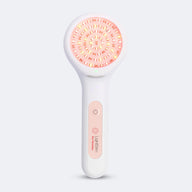
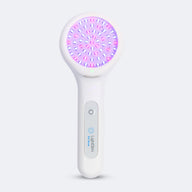
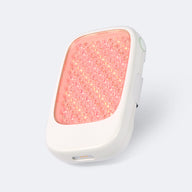
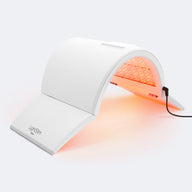



The Technology of LightStim
At its most effective, LED light therapy combines multiple wavelengths of red and infrared light at just the right frequencies for results that are more than skin deep. That is why LightStim led the way by developing MultiWave® Patented Technology to treat acne, aging skin, and pain.

The Basics of LED Light Therapy
Let’s start by defining what an LED is. LED stands for light emitting diode. A diode converts electricity into light energy that is then released in the form of photons, or particles, of light. Photons can then be absorbed into the body’s cells and tissues by light-absorbing molecules to trigger photobiomodulation. Photobiomodulation is the use of light to modulate biology. This process is also referred to as LED light therapy, low-level light therapy (LLLT), or red light therapy.
Similar to the way plants absorb sunlight, LED light therapy delivers light energy to your body to stimulate optimal cellular function. When these therapeutic wavelengths of light are absorbed by your cells, they bolster the body’s natural repair and renewal processes. Each wavelength used in LED light therapy has unique benefits, including improving the appearance of aging skin, treating acne, relieving muscle and joint pain, and supporting overall skin health.
How LED Light Therapy Works
Overall health begins at the cellular level. Every cell in your body needs energy to function, repair, and renew itself. LED light therapy delivers wavelengths of blue, amber, red, and near infrared light that help your cells produce more of the energy they naturally use every day.
The Wondrous Mitochondria
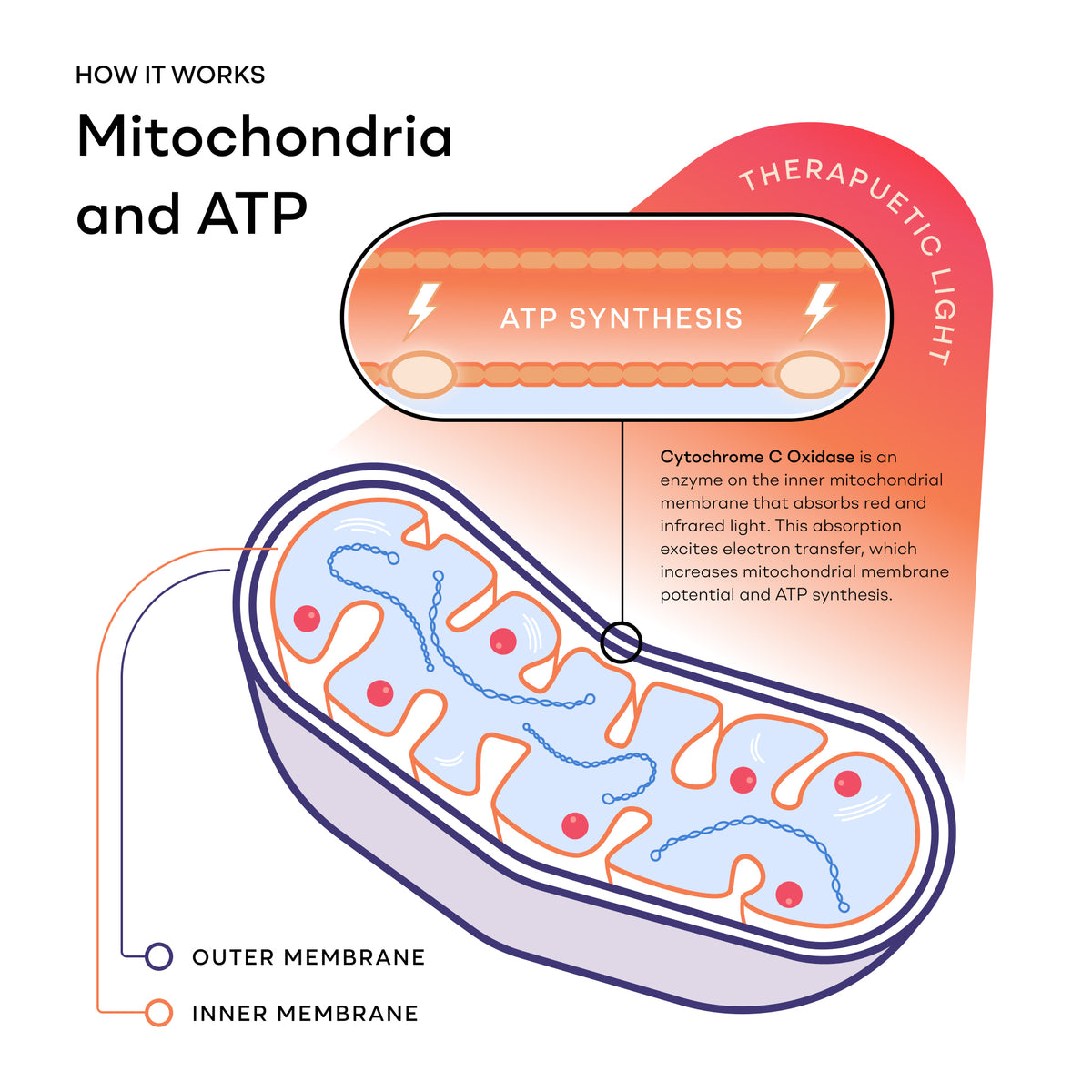
Mitochondria are structures found inside nearly every cell in your body, functioning like tiny power plants. They use oxygen to help convert energy from nutrients into ATP, a form of energy cells can use.
ATP (adenosine triphosphate) is the energy currency of life. Think of it as the fuel that powers healthy cellular activity. ATP supports the production of proteins, enzymes, and growth factors, as well as cell proliferation—all essential to physiological health and function.
Declining ATP production can result in cellular damage and dysfunction. Studies have shown that ATP production reduces progressively after the age of 18 in most individuals. LED light therapy supports your cells' natural energy production, giving them the fuel they need to perform their essential repair and renewal processes.
Defining the Nanometer
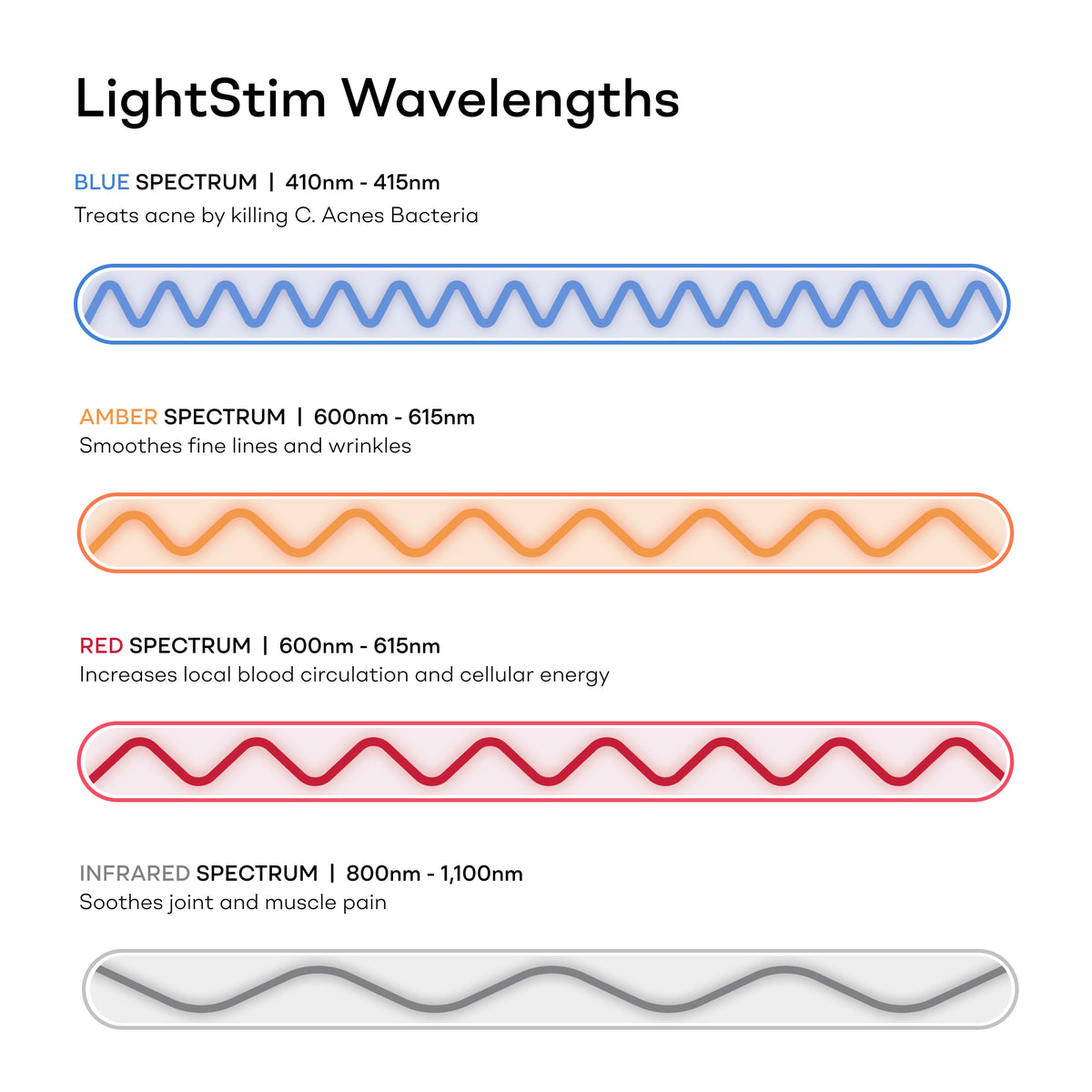
Light is measured in nanometers from one peak of a wavelength to another (1 unit = 1 billionth of a meter.) Shorter wavelengths are less penetrating while longer wavelengths are more penetrating. Certain wavelengths are proven to be therapeutic and are utilized in light therapy. Light between 600-1100nm, which includes amber, red and infrared light, is effective in treating wrinkles and pain. Light in the 400nm range has been proven to kill C. Acnes bacteria that contribute to acne.
Photobiomodulation Process

Light Reaches Cells
Light travels through the layers of the skin. The depth the light reaches depends on the nanometer measurement of the wavelength. The longer the wavelength, the deeper the light goes.

Cells Absorb Light
Red and infrared light is absorbed into the mitochondria, increasing mitochondrial membrane potential and ATP synthesis.

Cells Energized
With more energy available, your cells are better equipped to carry out their natural repair and renewal processes.
The LightStim Difference
LED light therapy has been proven over decades in thousands of peer-reviewed clinical studies by respected researchers worldwide. However, several factors contribute to this technology’s overall effectiveness: wavelengths, coverage, LED design, and proximity to the skin. LightStim has used established science to develop devices that utilize these elements for over 26 years.

Proximity to the Skin
Light reduces in intensity exponentially as it travels away from its source, as demonstrated by The Inverse Square Law. How far a device is positioned from your skin has a major impact on how much light is absorbed by your cells.
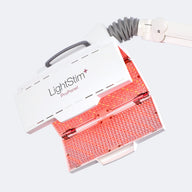
LightStim designs devices that position LEDs as close as possible to the skin to minimize the effects of light fall off and ensure maximum light absorption.

Therapeutic Wavelengths
Specific wavelengths of light are proven in studies to have unique benefits to the body. This includes relieving muscle tension, treating aging skin, improving overall skin health, and eliminating acne.
LightStim MultiWave® Patented Technology combines multiple wavelengths into one device for a comprehensive treatment that supports a range of cellular activity for better, more efficient results.

Even, Concentrated Coverage
LED count alone does not determine effectiveness. LED spacing, beam angle and optical overlap help determine whether light is distributed evenly throughout the treatment area.
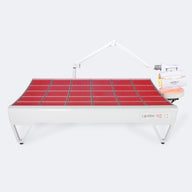
LightStim engineers devices with LED placement and concentration designed for consistent coverage across a targeted treatment area.

LED Quality and Light Transmission
The quality and consistency of LEDs and optical materials affect how reliably a device performs.
As opposed to wide-beam LEDs, LightStim’s custom focus-beam LEDs are concentrated enough to push past the skin barrier, bringing treatment deeper into the skin. LightStim’s medical-grade, biocompatible lens is designed for high-light transmission and also makes our devices easier to clean and maintain.

LightStim Manufacturing
LightStim devices are manufactured at our state-of-the-art facility in Irvine, California. From assembly to rigorous testing and meticulous inspection, our manufacturing process helps us ensure product quality, consistency and performance.
Our manufacturing facility is FDA inspected and operates under an ISO 13485-certified quality management system. LightStim holds more than fifteen FDA clearances and multiple technology patents.
Our Certifications





VISIA® Skin Analysis
VISIA® Skin Analysis uses specialized imaging technology to capture details that may not be visible to the naked eye. It can evaluate and track several characteristics of the skin, including wrinkles, pore depth, texture, and UV damage.
In VISIA images, detected wrinkles are highlighted with white lines. The system counts the wrinkles and compares the results with a large database of people in the same age range and with a similar skin tone. Your results are shown as a percentile.
VISIA imaging allows us to objectively evaluate the skin before and after a LightStim treatment. In our testing, VISIA captured an immediate improvement in the appearance of fine lines and wrinkles following treatment. This change is associated with a temporary plumping effect as circulation increases, helping the skin appear smoother, refreshed and more radiant.
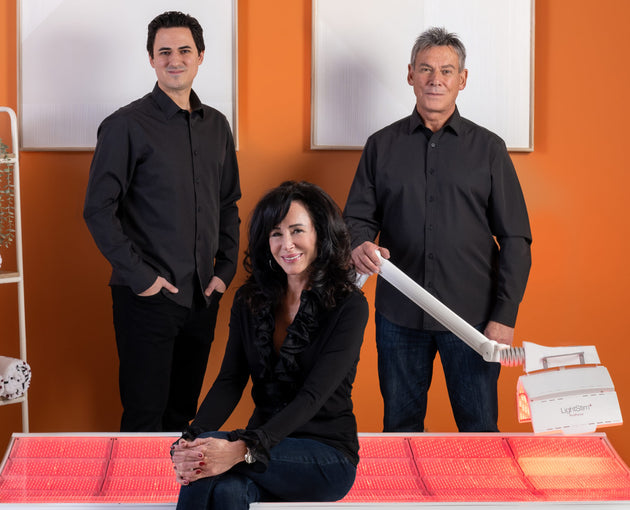
Meet LightStim's Educators

Amy Gardner
FOUNDING DIRECTOR OF EDUCATION
Allison Marks LE
DIRECTOR OF EDUCATION
Richard Maher CMT, LE
COMMUNICATIONS DIRECTOR, NATIONAL EDUCATOR
Become a LightStim Professional
Apply for a LightStim Professional account and gain access to exclusive pricing, a wealth of resources, premium support, and more.


